

“Do you want ice with that?”
Coca-Cola: our favourite non-alcoholic beverage.
It’s the taste of childhood. Of summer BBQs. Of Christmas.
The ice-cold sweetness on the tip of your tongue as you gulp it down.
Drawing smiley faces in the bottle’s condensation.
That hiss and clink as it’s poured over ice.
In (nearly) 140 years, Coke has redefined what it means to be a legacy brand. It has become a part of American culture and has built a global empire adorned in red and white.
And they did this, ultimately, through embracing nostalgia - and merch.
Coke managed to bottle up those emotional childhood ties into a single iconic visual identity. That with a branded glass, Christmas ad, or plushie, could be shared and loved again and again.
In this post, we’ll:
- Show how Coca-Cola used branded merchandise to build a global legacy brand.
- Explain how nostalgia, storytelling, and iconic design drive emotional loyalty.
- Share key merch-led branding lessons modern brands can apply today.
Want more content like this? Sign up for our newsletter, and you’ll receive all the latest trends and insights about marketing, merch and more straight to your inbox. It’s marketing inspiration as you’ve never seen it before.

What’s a legacy brand?
A legacy brand is what all brands aspire to be, which is:
- Usually very old
- Well-known
- Trustworthy
- Emotionally connected with its customers
- Consistently reliable
- Of high quality
They’re brands that have become part of our norm, that we’d notice if they suddenly disappeared. Those who, in everyday life, have become legendary.
Examples of legacy brands include:
- Coca-Cola
- Heinz
- Apple
- Nike
- Disney
A brief history of Coca-Cola merch
Brand it all!
Coke’s merch goal: to create the most useful and uplifting merch as possible - and be everywhere.
Absolutely everywhere.
Coca-Cola was founded in 1886, and originally served as a tonic syrup and soda water mix out of Jacob’s Pharmacy in downtown Atlanta, Georgia. It was an instant success, with everyone wanting to experience this new and exciting product.
From the very beginning, Coca-Cola understood the importance of branded merchandise in sharing its brand with the masses.
- From 1891, they’ve created calendars every year to advertise their drinks, allowing fans to take a piece of the brand home with them, even if they couldn’t drink it.
- When this proved a success, from 1900, Coca-Cola used every possible advertising medium they could to advertise themselves. You’ve probably seen examples of their bright, colourful ads from the time.
- In 1911, the annual advertising budget for The Coca-Cola Company surpassed $1 million for the first time.
If it could be branded, they would brand it.
From trays, postcards, thermometers, ashtrays and more. As long as it was useful, it was Coca-Cola.
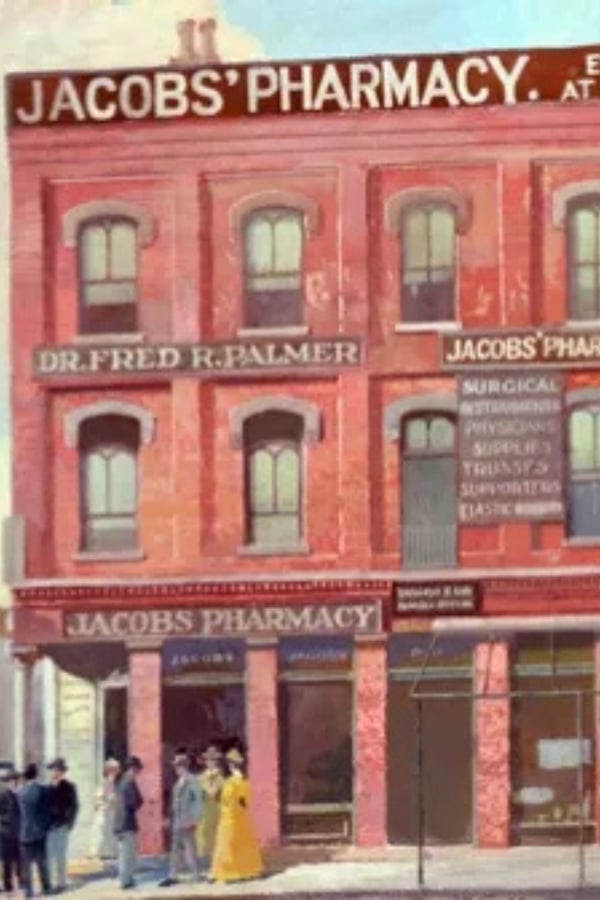
Image source: https://www.coca-colacompany.com/about-us/history#timeline
Post-war boom
The ‘golden age’ of Coca-Cola advertising, the 1950s to 1970s, is when Coke really grew into its branding boots.
- Coke became the first product to appear on the cover of Time magazine in 1950.
- In 1969, the iconic red and white colour scheme and logo were created, cementing it in branding history.
- There was an explosion of consumer goods, and Coke was quick to join in.
There was such a boom in Coca-Cola merch created during this time that anything from this period holds little monetary value. However, the nostalgic appeal is second-to-none.
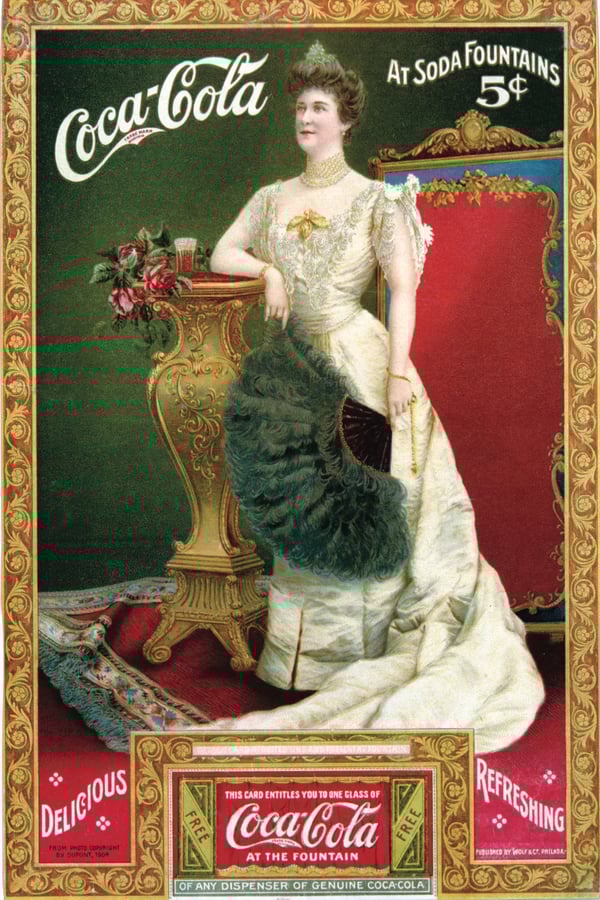
Image source: https://www.coca-colacompany.com/about-us/history#1900s
It’s called fashion
In the 1980s, Coca-Cola clothing really took off.
- As part of a collaboration, Tommy Hilfiger, a newbie (at the time) in the design world, was hired to design a line of clothing for Coca-Cola.
- These jackets and jumpers utilised the brand’s distinctive brand assets to create big and bold designs.
- Nowadays, they’re proper symbolic of that 1980s retro style that definitely wasn’t worn to blend in.
Coca-Cola merch today
Today, Coca-Cola merch is still an integral part of the brand’s marketing strategy - I’m sure you’ve still got an old Coca-Cola glass shoved in the back of your kitchen cupboard.
By combining nostalgic favourites with modern trends in their merch, the brand has kept its legacy status as a company we all know and love (despite our better judgment sometimes).
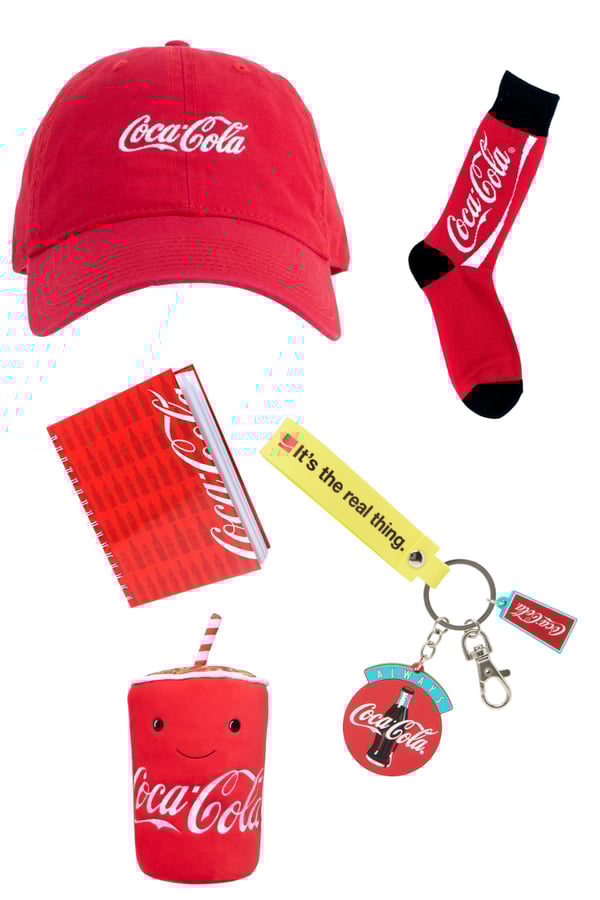
Image source: https://intl.cokestore.com/
How Coca-Cola built a legacy brand with branded merchandise
An unmatched visual identity
For Coca-Cola, its instantly recognisable branding is what sets it apart from its competitors.
By utilising these distinctive brand assets in their merchandise, consumers are able to become a part of the brand.
They can hold a bottle, feel the red, and see the logo in all its glory in the palm of their hand.
This makes all the difference when making a brand approachable and memorable.
The barrier between fans and brand dissolves into a flurry of Coke keyrings, notebooks and glasses.
From the logo to the colours to the bottle itself, every detail of Coca-Cola’s branding is considered, unique, and impressive.
An iconic bottle
The iconic curves of the Coca-Cola bottle were first designed in 1915 by Alexander Samuelson, and it was an instant hit.
Its distinctive shape was instantly recognisable, even in the dark, or broken on the ground, and the design was finally trademarked in 1961.
However, that iconic curve? A mistake. It was thought to be the shape of a coca bean; however, its identity was mistaken, and the shape is actually based on the ‘cacao’ bean.
One of the greatest mistakes in branding history.
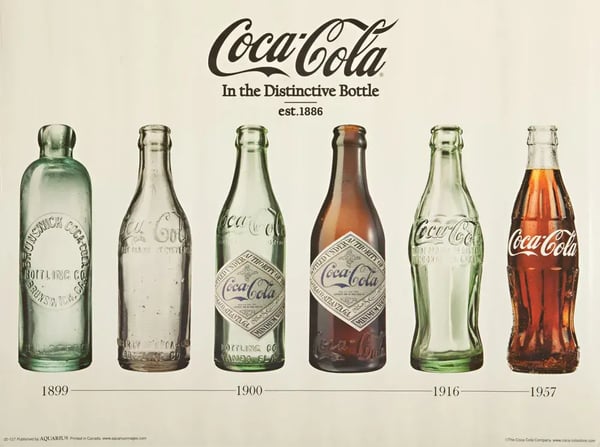
Image source: https://www.coca-colacompany.com/about-us/history/the-history-of-the-coca-cola-contour-bottle
A distinctive logo
The distinctive ‘Coca-Cola’ logo was written using the Spencerian script. The ‘Cola’ is meant to be spelt with a ‘K’, but it was changed to a ‘C’ to better align with the ‘Coca’ - creating the brand logo we know and love today. The red logo wasn’t introduced until 1969.
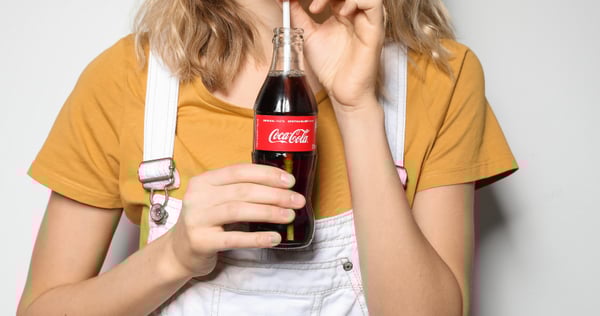
The brand’s Coca-Cola Red came from painting the wooden whiskey barrels that the Coca-Cola syrup was originally transported in, in an attempt to hide their ‘vulgar’ origins.
The infamous Coca-Cola Red has come to symbolise energy, joy and excitement - exactly the emotions the brand wants you to feel with every sip.
A legendary mascot
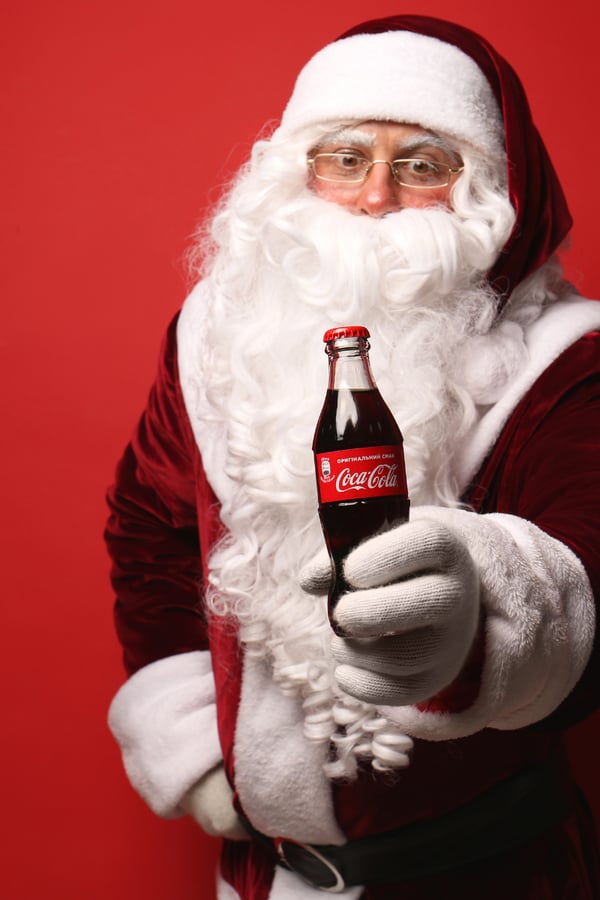
You can’t talk about Coke’s superb visual identity without mentioning its most famous mascot: Santa himself.
Inspired by the 1822 poem “The Night Before Christmas”, Sunblom took inspiration from the descriptions to design the Santa we’ve all come to love and know today: in his legendary red coat.
Trimmed with white, Sunblom’s Santa mirrored the colours of Coke itself.
He was happiness. He was joyful. He was Christmas - and therefore, so was Coke - and it led to a whole host of holiday-themed merchandise being created.
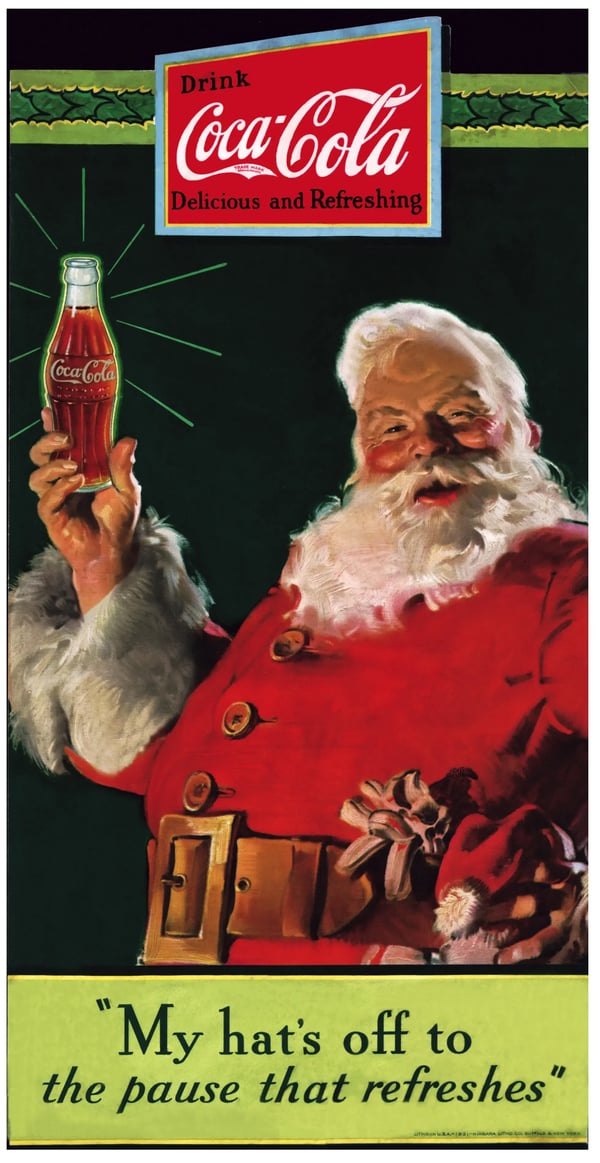
Image source: https://www.coca-colacompany.com/about-us/history#1930s
These ads were a staple of Coke’s holiday advertising right through to the 1960s, by which time, Santa was basically on Coke’s payroll.
Now, his look may have been given an AI update, but he’s still the same jolly Santa we all know and love from the 1931 design.
Nostalgic appeal
Coke has a nostalgic appeal, one that a lot of brands strive to achieve, but very few actually manage.
With every bottle, can or poured pint, the taste of Coke instantly takes you back to happier, simpler times. That rush of excitement (thanks, sugar), the straw you twirl between your fingers, the bubbles that pop on your tongue.
It’s your childhood in a bottle, and Coke know it.
And they make sure their merch sparks off these same emotions, too. It’s physical, emotional touchpoints to be kept. To reminisce over. To make you thirsty for another Coke.
Branded products help a brand stay relevant and loved in the background of your everyday life.
This nostalgia marketing technique is so successful because it’s one of the best ways a brand can build an emotional connection with its audience.
And Coke is the absolute king of nostalgia marketing.
Read more: Are Labubus trolling marketers? What B2B brands can learn from the latest TikTok craze
Seasonal monopoly
Because of Coke’s partnership with the big Mr C., they’ve had a seasonal monopoly on Christmas for nearly 100 years.
Christmas wouldn’t be Christmas without the Coke van and ad, and the delightful tune of “The Holidays are coming” stuck in your head for the whole of December.
And for Coke, this nostalgic seasonal appeal increases sales by 36% across all Coca-Cola trademark drinks during the festive season.
Because we’re all looking to recreate that nostalgic '90s Christmas magic, right?
With multi-coloured tree lights and handmade paper chains strewn across ceilings, the only thing missing is a Coke - according to Santa.
Emotional engagement
Coke is the drink of childhood. Of 12th birthday parties and McDonald's Happy Meals and cinema trips with friends.
We all grew up on Coca-Cola.
And because Coke’s merch catches onto these emotions of happier times, it transports you back with every glass, can, or stolen sip.
These positive emotional ties to a brand forge trust through familiarity and happy memories, creating a loyal customer base.
Read more: Reboots & revivals: Why are so many brands going back to the past?
Collector’s FOMO
FOMO (Fear of Missing Out) and scarcity marketing tactics fuel merch’s popularity amongst collectors, and Coke is no exception.
Because of the vast array of merchandise that’s been created over the years, Coca-Cola merchandise collectors are forever trying to find the rarest merchandise of them all.
From exclusive pieces that can’t be found anywhere to old, limited edition local releases, Coke earns die-hard fans of its merch through the need to collect them all.
And thanks to Coke being such a legacy brand, a lot of its merch has been lost to time - waiting to be rediscovered in an attic, garage or old storage shed.
The hunt is on.
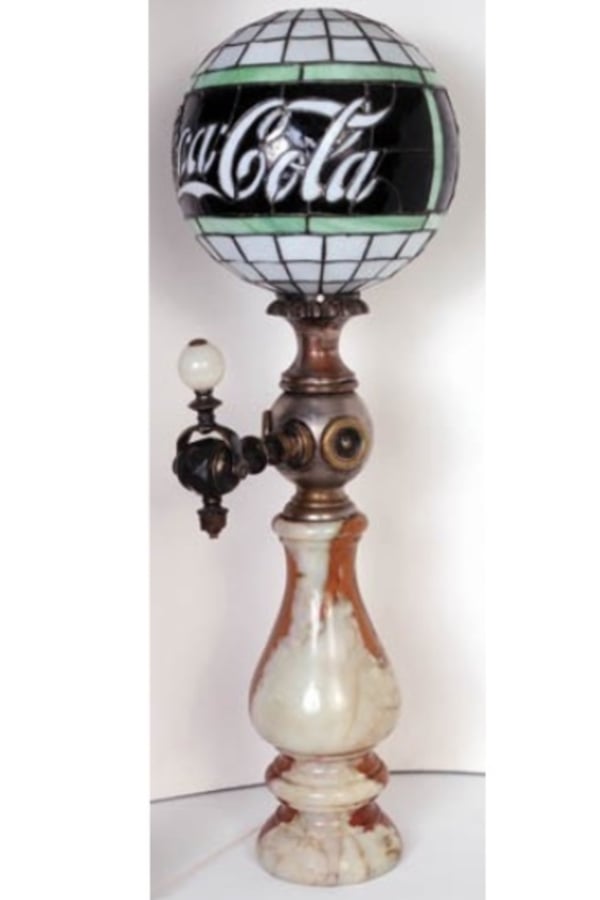
Image source: https://www.catawiki.com/en/stories/4635-top-5-most-expensive-coca-cola-merchandise-items-ever-sold#:~:text=There%20are%20very%20few%20pre,detail%20and%20small%20glass%20pieces.
Brand storytelling
Coke’s merchandising is the backbone of its brand narrative.
It’s the historical framework that legitimises the brand’s story.
You can travel through American history with its merch - from the first calendars created, the branded ashtrays, to the 1993 polar bear plushies and special edition Olympic bottles.
Merch allows Coke to bring to life its brand story for its fans and for them to own a tiny part of its history.
It’s America, through and through
Coca-Cola is America, and America is Coca-Cola. They’re both so interwoven together now that the American identity and Coke are one of the same, and in key moments in American history, Coke is never too hard to find.
World War Two
During WWII, Coca-Cola made sure that its troops didn't go without by building x64 bottling plants overseas. This made sure the soldiers always had a Coke, with 5 billion bottles of Coca-Cola sent to soldiers, for when they needed a taste of home most.
These were then inevitably shared with locals and became a marketing move like no other.
The sweet syrupy drink became associated with the soldiers, and became a symbol of America’s generosity and friendliness during hard times.
It increased Coke’s global footprint, ensuring that once the war ended, the brand was ready to serve a whole host of new Coke fans in Europe, too.
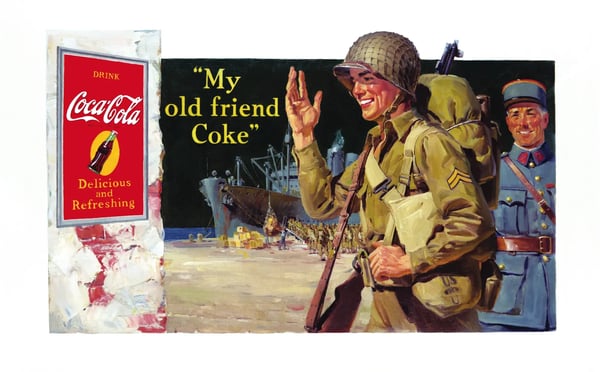
Image source: https://www.coca-colacompany.com/about-us/history#1940s
Vietnam War
In 1971, one of Coke’s ads with the song, “I’d Like to Buy the World a Coke”, became a peace anthem for the Vietnam War.
Space Race
In 1985, Coca-Cola was even sent into space, making it the first soft drink consumed in zero gravity.
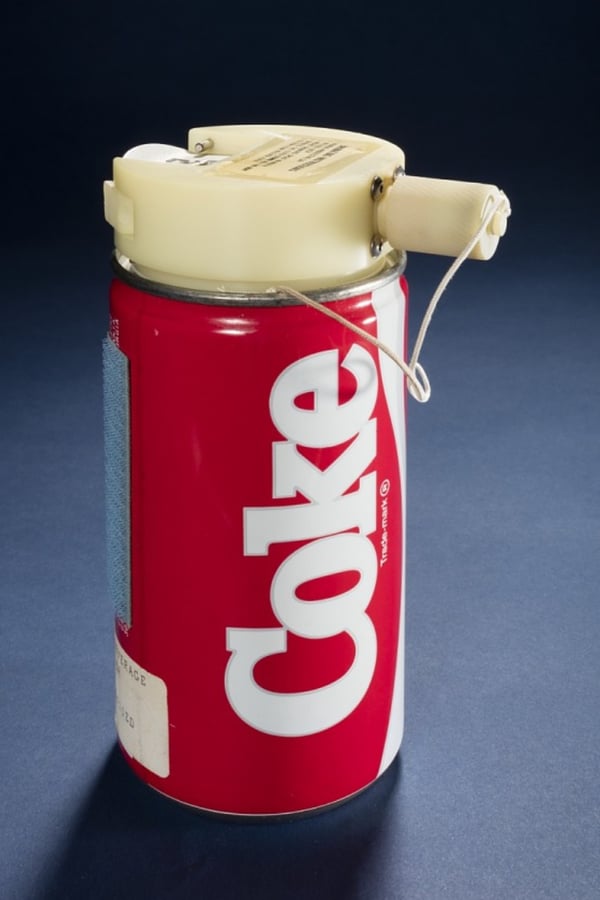
Image source: https://airandspace.si.edu/collection-objects/coca-cola-can-sts-51-f/nasm_A19850814000
Social optimism
Coke is designed to be enjoyed in the moment.
It’s symbolic of happy times, and their recent summer campaign of “Enjoy the moment with a Coca-Cola” encourages fans to make memories in the moment with a Coke.
That sip of a Coke brings you to your senses, to the present moment.
It’s a boost of endorphins that makes you think of laughter and summer, and happier times.
Coke is social optimism, because you can never be sad when you drink a Coke.
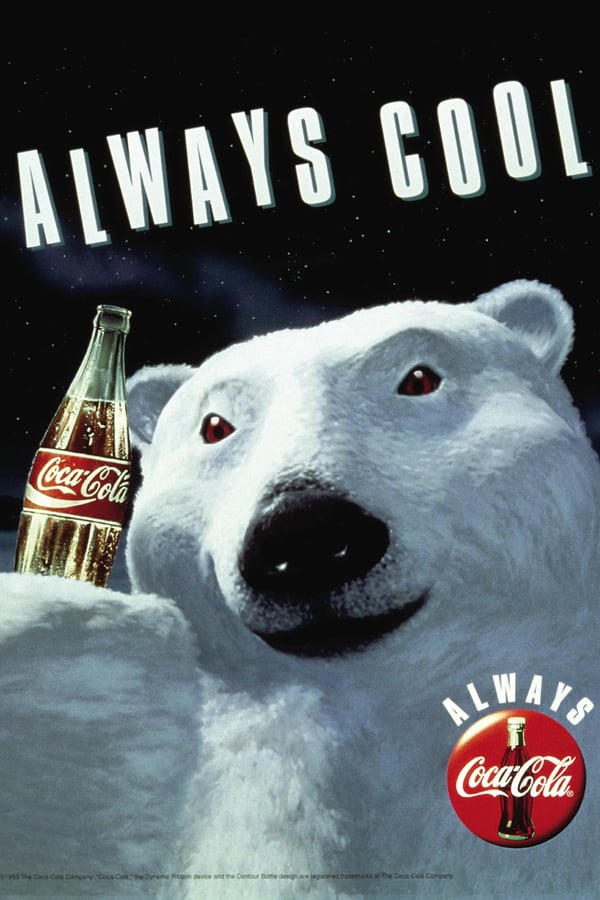
Image source: https://www.coca-colacompany.com/about-us/history#1990s
What your brand can learn from Coca-Cola
Create an emotional bond
For any brand, whether it’s a B2B, B2C, or D2C one, building an emotional connection with its audience is pivotal for its relationship strategy - and Coke are the master of this because they excel in Return on Emotion.
What’s Return on Emotion?
Return on Emotion is all about turning every activation into an unforgettable, brand-defining moment fueled by powerful, emotional connections.
With 95% of purchase decisions driven by emotion, merchandise harnesses this insight to build meaningful connections that inspire loyalty and engagement.
You can read more about Return on Emotion over at Brand Revolution.
For Coke, it’s building on those feelings of happiness, nostalgia and belonging.
For your brand: it's deciding on what emotions you want to evoke and how to create those lasting ties with your audience to lead to a loyal and lasting following.
Tell your story
We’ve always loved stories; it’s a part of what makes us human, and what connects us.
And for brands, it’s a great technique to be memorable and connect with their audience.
For Coke, every aspect of their brand is full of stories, from the shape of their bottles to the colour of their logos. With every inch of the brand explained by a narrative, we can’t help but fall in love with it - and remember the tales.
For your brand: try and include more of a narrative arc in your social posts, centred around your brand and its goals. This will build trust, loyalty and a deeper connection with your audience beyond your product or service.
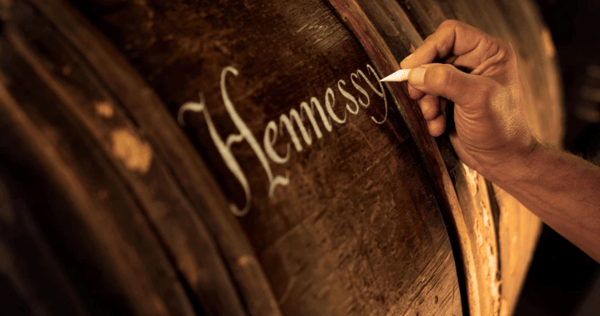
Read more: What Hennessy can teach us about building a brand
Offer tangible brand experiences
Thanks to the very nature of merch being tangible, it allows your customers to take a piece of your brand home.
This creates a deeper sense of connection, and therefore loyalty, between the brand and consumer.
Once they’ve purchased a cup or a hat or a notebook, they’re not just casual brand bystanders anymore; they’re product ambassadors that like the brand so much they’re saying to the world, “I am connected to this brand”.
For your brand: by creating these tangible touchpoints and brand experiences through merch, you’ll strengthen that bond between your audience and your brand in a way that speaks to a longer, more fruitful relationship.
Build a community, not just a brand
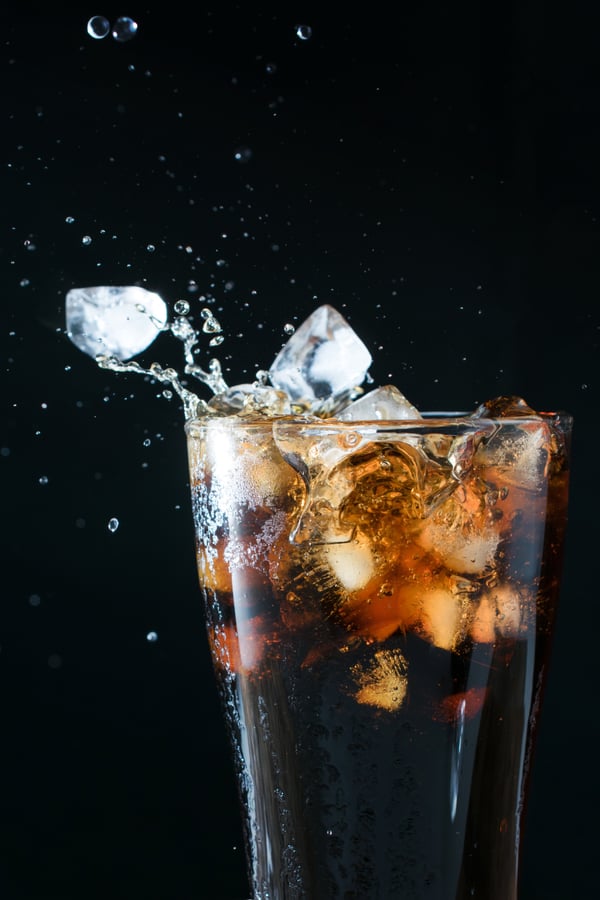
Having a Coke is a social event. For kids, it’s the equivalent of going for a pint or grabbing a coffee, and it’s something you can still do today, whatever your age.
It’s a time to catch up, reconnect, and take a refreshing break.
For your brand: by building a community of like-minded fans around your brand - around something that extends beyond your product to a worthy cause, or something bigger than you - you’re cementing your brand in their community, and the everyday lives of your fans.

It’s always been Coke
Whether you’re a fan of diet, zero, or the full-fat Coke, there’s no denying that Coke is, and forever will be, the beverage of the masses.
Thanks to a reputation built on the comfort of nostalgia that’s kept alive through promotional products, it’s a brand like no other.
And merch helped it spill into American homes and culture. Plus, if Santa Claus endorses them, who are we to argue?
I don’t know about you, but I'm feeling rather thirsty - think it’s time for a Coke.
Want more content like this? Sign up for our newsletter, and you’ll receive all the latest trends and insights about marketing, merch and more straight to your inbox. It’s marketing inspiration as you’ve never seen it before.