

.jpg)
When I was a kid, football stickers were everywhere.
We’d swap them over morning break, sneak them to each other during Maths, exchange our favourite sweets to get the one we were missing.
And even though I wasn’t a fan of the game, I started collecting them. I’d swap, compete, and revel in rare cards as much as the next kid. And as I’d slide the stickers into a specialised folder, the players' faces staring blankly out at me, I swear they’d whisper, “fake fan, fake fan,” under their imaginary breaths.
But that wasn’t the point. The point was the collecting. The feeling of being part of something bigger than yourself. The collaborative experience of memorabilia hunting.
Whether it was football stickers, your first game ticket, or a baseball you were lucky enough to catch, collectable sporting memorabilia holds a special nostalgic place in our hearts.
They allow us to hold onto moments. To history. To relive game-changing goals and ‘meet’ exceptional players. It’s memory made tangible.
They allow us to join in with the great game, even off-pitch, from our sofas.
From programme collections in the early 1900s to digital football NFTs that were worth thousands, football memorabilia has evolved alongside the game itself to become the global industry driven by nostalgia, fandom, rarity, and investment potential it is today.
Take a look back at the evolution of football’s favourite memorabilia and see what pieces have earned their place in merchandise history.
Want more content like this? Sign up for our newsletter, and you’ll receive all the latest trends and insights about marketing, merch and more straight to your inbox. It’s marketing inspiration as you’ve never seen it before.

In short…
Football memorabilia has evolved from simple matchday keepsakes into a global collectables industry shaped by nostalgia, rarity, fandom, and emotional connection. From Panini stickers and signed shirts to million-pound auction pieces and failed football NFTs, memorabilia continues to reflect both the history of the game and the changing ways fans connect with it.
What makes something a collectable?
It’s important to note that not every old football shirt or signed programme automatically becomes a collectable. That’s because, for something to be a collectable, it needs to be:
- Rare
- Authentic
- Have some sort of emotional significance
- Be in demand
But, most importantly, the item needs to have a story attached to it. It either needs to be connected to an iconic moment in game history (such as a game-changing goal or a historic match) or linked to a legendary player.
For example, a match-worn shirt from a World Cup final carries far more significance than a standard replica because it represents a real moment in football history.
Above all, however, for something to be a collectable, it needs to have a nostalgic attachment.
Football memorabilia connects fans to unforgettable moments, childhood nostalgia, club identity, and sporting greatness. Whether it’s a signed shirt from Lionel Messi or a ticket stub from the 1966 World Cup final, the value often lies as much in the memory as it does in the object itself.
.jpg?width=700&height=400&name=The%20evolution%20of%20football%E2%80%99s%20favourite%20memorabilia%20(26).jpg)
Read more: Top-scoring sporting memorabilia through the ages
A brief history of football memorabilia
Are you ready for a whistle-stop tour of football memorabilia through the ages? Grab your boots and hold onto your shirts, and get ready to explore the timeline of football merchandise.
.jpg?width=700&height=400&name=The%20evolution%20of%20football%E2%80%99s%20favourite%20memorabilia%20(10).jpg)
The early 20th century: Where it all began
In the late 19th century and early 20th century, there wasn’t any official memorabilia, so fans would take it upon themselves to cherish their matchday programmes and ticket stubs, keeping them as a form of memorabilia.
However, there was never any long-term financial thinking behind collecting these, just sentimental value.
.jpg?width=700&height=400&name=The%20evolution%20of%20football%E2%80%99s%20favourite%20memorabilia%20(11).jpg)
1930s: The creation of the Loving Cups
The first example of official football merch. Thirty commemorative football Loving Cups were created in 1937 by Stoke City Football Club President and Chairman, Sir Francis Joseph, to commemorate the coronation of Their Majesties King George VI and Queen Elizabeth.
The Loving Cups had three sides to them:
- On one side, the Royal Coat of Arms,
- On another, a shield commemorating the coronation,
- And the final, football players in red and white stripes.
Once the thirty cups were made, their moulds were destroyed, making them truly rare, with the idea being for the cups to be used by football clubs on New Year’s Day to toast the game and the King.
Nowadays, the cups are either displayed on teams’ grounds, in museums, lost, or still used as intended, even today, nearly 100 years later.
.jpg?width=700&height=400&name=The%20evolution%20of%20football%E2%80%99s%20favourite%20memorabilia%20(3).jpg) Image source: https://stokefootballhistory.substack.com/p/the-loving-cups
Image source: https://stokefootballhistory.substack.com/p/the-loving-cups
1950s: Football shirts
The 1950s saw the popularity of football skyrocket, largely due to the post-war economic recovery. And what did fans of the game see most (apart from the players, the pitch, and the ball)?
The shirts on the backs of their favourite players.
.jpg?width=700&height=400&name=The%20evolution%20of%20football%E2%80%99s%20favourite%20memorabilia%20(4).jpg) Image source: https://edition.cnn.com/2022/11/24/football/england-usa-world-cup-1950-spt-intl
Image source: https://edition.cnn.com/2022/11/24/football/england-usa-world-cup-1950-spt-intl
These weren't the fancy uniforms we see today, often plain and made of heavy cotton. Nevertheless, owning the shirts of iconic players brought you just that little bit closer to your heroes.
.jpg?width=700&height=400&name=The%20evolution%20of%20football%E2%80%99s%20favourite%20memorabilia%20(12).jpg)
1960s: Bringing Willie home
The 1960s saw a rise in games being televised, making them easier (and cheaper) to watch from home. This made them far more accessible for more people to watch and made the players’ shirts even more popular.
.jpg?width=700&height=400&name=The%20evolution%20of%20football%E2%80%99s%20favourite%20memorabilia%20(5).jpg) Image source: https://www.fourfourtwo.com/features/world-cup-willie-story-1966-mascot
Image source: https://www.fourfourtwo.com/features/world-cup-willie-story-1966-mascot
In 1966, the World Cup introduced its official mascot, Willie, who introduced the opportunity for official merch offerings for games. He had his own merch collection of badges, programmes, and other bits of merch that are still highly collectable today.
.jpg?width=700&height=400&name=The%20evolution%20of%20football%E2%80%99s%20favourite%20memorabilia%20(13).jpg)
1980s: A global phenomenon
By now, football was the game everyone wanted to watch, play, and collect. Signed football shirts were still the most popular collectable, with players’ autographs not far behind. These became so in demand that teams started doing official signings, which still happen today.
1990s: Hello, dial-up
With collectors and archivists working together to document the history of the game through souvenirs, merch, and memorabilia, auction platforms and dedicated dealers exploded thanks to the internet.
With the online world making it easier and more accessible than ever for products to be shared, shipped and sold, football merch was suddenly in every home, office, and playground.
.jpg?width=700&height=400&name=The%20evolution%20of%20football%E2%80%99s%20favourite%20memorabilia%20(6).jpg) Image source: https://thefootballfreak.com/the-evolution-of-football-boots-from-1526-to-now/
Image source: https://thefootballfreak.com/the-evolution-of-football-boots-from-1526-to-now/
2000s: Merch boom
High-speed broadband began replacing dial-up, and with it came a new era of online memorabilia trading.
Online marketplaces and specific websites made buying merch quicker and easier than ever.
And the biggest boom: specialist football auctions, where football merch, signed boots, gloves, and shirts, began going for high prices.
.jpg?width=700&height=400&name=The%20evolution%20of%20football%E2%80%99s%20favourite%20memorabilia%20(16).jpg)
2010s: Women’s World Cup stickers
2011 marked the introduction of Panini stickers (the most famous brand of collectable football stickers) for the 2011 FIFA Women’s World Cup, showing recognition of the marketability and appeal of women’s football memorabilia.
.jpg?width=700&height=400&name=The%20evolution%20of%20football%E2%80%99s%20favourite%20memorabilia%20(8).jpg) Image source: https://www.theguardian.com/football/2011/jun/16/panini-womens-world-cup-stickers
Image source: https://www.theguardian.com/football/2011/jun/16/panini-womens-world-cup-stickers
2020s: Football merch today
Football memorabilia today is more global and accessible than ever before, with fans able to buy everything from match-worn shirts to limited-edition collaborations online within seconds.
Social media has also transformed collecting culture, turning rare football merch into status symbols as much as nostalgic keepsakes.
But not every attempt to modernise football memorabilia has been successful.
.jpg?width=700&height=400&name=The%20evolution%20of%20football%E2%80%99s%20favourite%20memorabilia%20(27).jpg)
The idea that failed: Football NFTs
In the early 2020s, football NFTs promised to revolutionise memorabilia collecting.
These digital assets allowed fans to buy, trade, and ‘own’ exclusive football moments, artwork, and player cards online, with some selling for thousands (and even millions) during the height of the NFT boom.
But as hype faded and cryptocurrency markets crashed, interest in football NFTs quickly declined, with many fans struggling to connect emotionally to something they couldn’t physically hold.
.jpg?width=700&height=400&name=The%20evolution%20of%20football%E2%80%99s%20favourite%20memorabilia%20(9).jpg) Image source: https://www.fantokens.com/newsroom/football-nfts-blockchain-fan-experience
Image source: https://www.fantokens.com/newsroom/football-nfts-blockchain-fan-experience
The most popular examples of football memorabilia
From ticket stubs to football shirts, photos to toys, here are some of the most popular examples of football memorabilia throughout the game’s history.
1. Football shirts
By the 1980s, football shirts worn during games, or ones that were signed, had become prized possessions, especially as specific players reached legendary status.
This is because owning a shirt from a star player gave fans a physical connection to their idols.
.jpg?width=700&height=400&name=The%20evolution%20of%20football%E2%80%99s%20favourite%20memorabilia%20(24).jpg)
2. Collectable stickers
Panini is the most well-known producer of collectable football stickers and has dominated the market since 1970.
First launched in Italy by brothers Benito and Giuseppe Panini in 1961, their first global company success was the sticker album created for the 1970 World Cup, held in Brazil.
From there onwards, they rose in popularity as a relatively cheap and accessible collectable, allowing those with lower incomes and children to join in the fun of collecting football memorabilia.
Coca-Cola has even brought them back this year!
.jpg?width=700&height=400&name=The%20evolution%20of%20football%E2%80%99s%20favourite%20memorabilia%20(7).jpg) Image source: https://soccerstickersfc.net/2024/07/panini-euro-2000-complete-album/
Image source: https://soccerstickersfc.net/2024/07/panini-euro-2000-complete-album/
3. Match-used items
Boots, balls, and captain's armbands, particularly from famous matches, are super sought after as great examples of football memorabilia.
And one of the most popular is signed match balls, especially if they scored the winning goal.
Match programmes and ticket stubs hold collectable significance, too, especially from historic matches.
.jpg?width=700&height=400&name=The%20evolution%20of%20football%E2%80%99s%20favourite%20memorabilia%20(2).jpg)
Read more: The Evolution of Adidas FIFA World Cup Footballs
4. Signed photos
A photograph of a player scoring an important goal or one that was signed by the player themselves always holds a lot of significance for collectors.
5. Special-occasion items
Whether it be merch commemorating a player’s first match, their 100th goal, or retirement, items released to mark special occasions in a player’s career are always popular collectables.
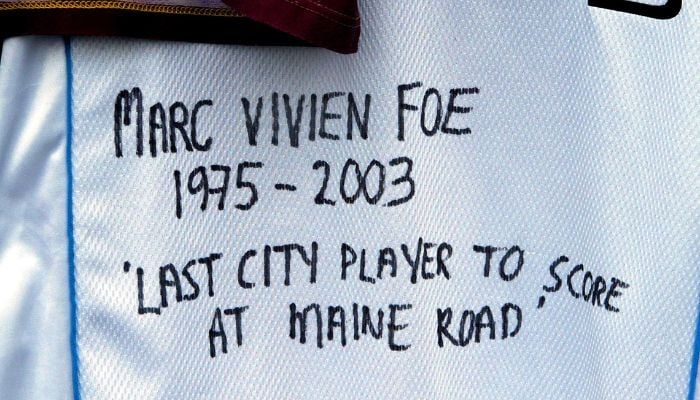 Image source: https://www.theguardian.com/football/2020/aug/05/footballers-who-have-had-club-shirts-retired-having-played-very-few-games
6. Iconic shoutout: Corinthian figures
And the most iconic, completely 90s, merch item that took the world by storm? Corinthian figures.
These caricature-style figures depicted famous footballers with small bodies and oversized heads, and were everywhere in the late 90s and early 2000s.
In 1995, the England squad were the first to be transformed into these models, and then other big clubs followed after.
Further teams and players were added over the months and years, until Corinthian closed its doors in 2011. However, the figurines are still popular amongst collectors today.
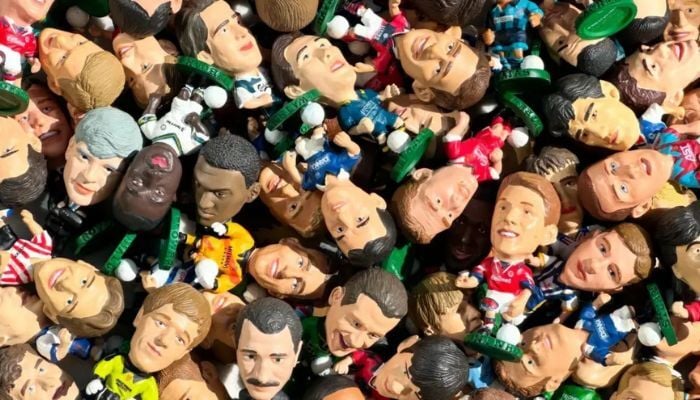 Image source: https://www.bbc.co.uk/news/articles/cp825elkwkzo
Why is football memorabilia so popular?
1. Childhood nostalgia
Football is a deeply emotional sport. Many have grown up with it dominating their weekends, with happy childhood memories tied to games. Football memorabilia allows fans to preserve moments that mattered to them and relive those happier times.
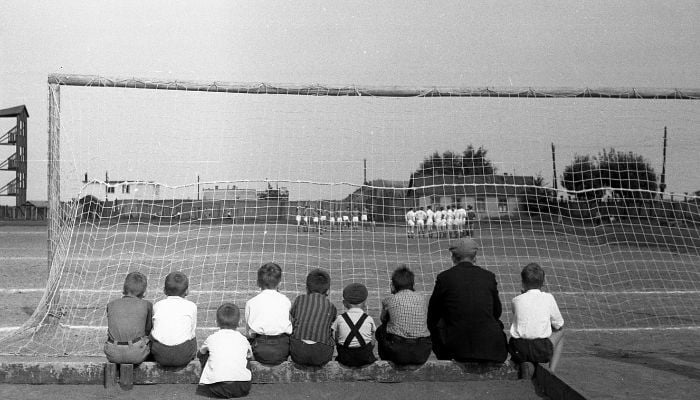
2. Football is part of our cultural identity
Especially in the UK, football is woven into our everyday lives. When meeting new people, it’s common to be asked what team you support, and for team allegiances and rivalries to bleed over into already established friendships.
Football clubs become part of family traditions, local identity, and personal history, and collecting memorabilia helps fans feel connected to those stories across generations.
3. Scarcity means valuable
Because football has been around a long time, rare memorabilia linked to significant moments are super valuable for collectors. This means that limited-edition items, signed pieces, and objects tied to iconic matches naturally become more desirable over time.
Read more: 8 tips for getting your office into the sporting spirit.jpg?width=700&height=369&name=Blog%20-min%20(1).jpg)
The most expensive examples of football memorabilia in history
Would you ever pay over half a million pounds for a napkin? What if it were a famous napkin? Here are 6 examples of the most expensive examples of football memorabilia in history.
1. £ 7.1 million: ‘Hand of God’ shirt
We’re starting strong with the shirt worn by Argentinian Diego Maradona when he scored the infamous 'Hand of God' goal against England in the 1986 World Cup quarter-finals. It sold for a record-breaking £7.1m at auction back in 2022, making it the most expensive piece of football memorabilia in history.
Brahm Wachter, Sotheby’s head of streetwear and modern collectables
.jpg?width=700&height=400&name=The%20evolution%20of%20football%E2%80%99s%20favourite%20memorabilia%20(17).jpg) Image source: https://www.theguardian.com/football/2022/may/04/diego-maradona-hand-of-god-shirt-sold-for-record-71m-at-auction
Image source: https://www.theguardian.com/football/2022/may/04/diego-maradona-hand-of-god-shirt-sold-for-record-71m-at-auction
2. £6.1 million: Lionel Messi's shirts
Not close behind are six of Lionel Messi’s shirts, which he wore during the 2022 World Cup. They sold at auction for a combined £6.1m in 2023, showcasing the immense value placed on memorabilia from iconic moments in football history.
.jpg?width=700&height=400&name=The%20evolution%20of%20football%E2%80%99s%20favourite%20memorabilia%20(18).jpg) Image source: https://www.bbc.co.uk/sport/football/67718748
Image source: https://www.bbc.co.uk/sport/football/67718748
3. £881,000: ‘The Sheffield Rules’
‘The Sheffield Rules’ is football's oldest rule book, which fetched an astonishing £881k at auction in 2011, highlighting the historical significance and value of foundational documents in the sport.
.jpg?width=700&height=400&name=The%20evolution%20of%20football%E2%80%99s%20favourite%20memorabilia%20(19).jpg) Image source: https://news.sky.com/story/earliest-footie-rulebook-sells-for-900k-10487144
Image source: https://news.sky.com/story/earliest-footie-rulebook-sells-for-900k-10487144
4. £762,000: Messi’s napkin
The Messi napkin, sold at auction in May 2024 for £762,000, on which Argentina legend Lionel Messi's first-ever Barcelona contract was drawn up and signed.
Written in Spanish in blue ink, the agreement reads:
.jpg?width=700&height=400&name=The%20evolution%20of%20football%E2%80%99s%20favourite%20memorabilia%20(20).jpg) Image source: https://www.bbc.co.uk/sport/football/articles/cpwgdyyplv9o
Image source: https://www.bbc.co.uk/sport/football/articles/cpwgdyyplv9o
5. £760,000: The FA Cup Trophy
Before the modern era of football, winning the FA Cup was considered the pinnacle of English football.
That’s why the original FA Cup trophy used between 1886 and 1910 sold for an incredible £760,000 in 2020, making it one of the rarest and most culturally significant pieces of football memorabilia ever auctioned.
Manchester City chairman Khaldoon Al Mubarak
.jpg?width=700&height=400&name=The%20evolution%20of%20football%E2%80%99s%20favourite%20memorabilia%20(21).jpg) Image source: https://www.skysports.com/football/news/34651/12181992/manchester-city-owner-sheikh-mansour-purchases-old-fa-cup-trophy-at-auction
Image source: https://www.skysports.com/football/news/34651/12181992/manchester-city-owner-sheikh-mansour-purchases-old-fa-cup-trophy-at-auction
6. £200,000: Alan Ball's World Cup winner's medal
Alan Ball was the youngest player in England’s 1966 World Cup squad and soon became a standout star. He played a crucial role in England’s historic World Cup victory, which later led to his winner’s medal being sold for £200,000 in 2022.
.jpg?width=700&height=400&name=The%20evolution%20of%20football%E2%80%99s%20favourite%20memorabilia%20(22).jpg) Image source: https://www.bbc.co.uk/news/uk-england-york-north-yorkshire-63917594
Image source: https://www.bbc.co.uk/news/uk-england-york-north-yorkshire-63917594
Why is football memorabilia so valuable?
Football memorabilia is so valuable because it allows fans to have a tangible connection to their favourite players, matches, and moments that shaped the sport’s history. But besides the emotional value tied to football memorabilia, there are other factors in play when considering the value of particular pieces.
1. Player connection
One of the biggest factors influencing value is the player connected to the item. Memorabilia signed by legendary names such as Pelé, Diego Maradona, or Lionel Messi can command enormous prices due to their iconic status within the game.
2. The context matters
The context behind the item also matters; for example, a football signed during a World Cup final or a shirt worn during a record-breaking season carries far more emotional and historical significance than something signed at a promotional event.
3. Product rarity
Rarity is another major reason why football memorabilia becomes so valuable.
Limited-edition items, one-off match-worn shirts, and collectables tied to iconic moments are naturally harder to find, making them far more desirable among collectors. As demand rises and availability shrinks, prices often follow suit.
4. The item’s condition
Condition also plays a crucial role. Items kept in pristine condition, with clear signatures and minimal wear, are generally considered more collectable and can achieve significantly higher valuations at auction.
5. Authenticity is everything
With counterfeit memorabilia becoming increasingly common, collectors place huge importance on certificates of authenticity (COAs) and trusted sellers. Genuine, verified memorabilia offers confidence that the item is truly connected to the player or moment it claims to represent.
.jpg?width=700&height=400&name=The%20evolution%20of%20football%E2%80%99s%20favourite%20memorabilia%20(25).jpg)
The future of football memorabilia
As with the age of the internet having a massive impact on the popularity of football memorabilia, now, the future is looking digital.
But that isn’t to say physical memorabilia is disappearing anytime soon.
The appeal of a signed shirt, an old programme, or a treasured ticket stub will outlive any digitally created memorabilia, for the significant reason that it’s memory made tangible.
The biggest appeal for memorabilia is that you can hold history in your hands and become a part of the narrative.
Digital collectables? Not so much.
And as long as football continues creating unforgettable moments, fans will continue searching for ways to hold onto them.
.jpg?width=700&height=400&name=The%20evolution%20of%20football%E2%80%99s%20favourite%20memorabilia%20(23).jpg)
FAQs about football memorabilia
1. What is football memorabilia?
Football memorabilia includes collectable items linked to football players, clubs, matches, and historic moments, such as signed shirts, match tickets, programmes, stickers, and match-used items.
2. Why is football memorabilia valuable?
Football memorabilia becomes valuable through rarity, authenticity, player connection, condition, and emotional significance tied to iconic moments in football history.
3. What is the most expensive piece of football memorabilia ever sold?
Diego Maradona’s ‘Hand of God’ shirt is currently the most expensive piece of football memorabilia ever sold, fetching £7.1 million at auction in 2022.
4. Are football NFTs still popular?
Football NFTs experienced huge popularity during the early 2020s, but interest declined significantly after the cryptocurrency market crash and the fading hype around digital collectables.
5. What are the most popular types of football memorabilia?
Some of the most popular football memorabilia include signed shirts, Panini stickers, match-used footballs, ticket stubs, programmes, signed photographs, and limited-edition collectables.
Score goals with branded merch
The evolution of football memorabilia can be traced back to one significant influence: the sentimental pull it creates between the game, players, and fans.
And that emotional pull isn’t unique to just football.
Your brand can create the same emotional resonance with your own audience through promotional products that champion something we like to call ROE.
ROE, or Return on Emotion, is all about turning every activation into an unforgettable, brand-defining moment fueled by emotional connections and reactions.
Because, did you know, 64% of consumers are more likely to remain loyal to a brand with which they feel an emotional connection? And with 95% of purchase decisions driven by emotion, brands are harnessing these insights to build meaningful connections that inspire loyalty and engagement through emotional bonds.
Whether that’s through branded shirts, gamified giveaway strategies, or limited-edition designs, your audience wants to build emotional connections with your brand, supporting your wins as much as their favourite football stars.
It’s time to take emotions off the pitch and into the boardroom.
Want more content like this? Sign up for our newsletter, and you’ll receive all the latest trends and insights about marketing, merch and more straight to your inbox. It’s marketing inspiration as you’ve never seen it before.