


It’s getting LOUD in here.
You know when you’re at a bar, trying to order a drink, but it’s just so busy and noisy that the bartender has trouble hearing your order?
Yeah, that’s what it’s like working in marketing right now.
It’s estimated that, on average, we’re exposed to 6,000 - 10,000 ads a day. And, unsurprisingly, audiences are feeling overwhelmed, and quite frankly, fatigued by it all.
That’s why this year is all about creating human connections with lasting emotional impact. From invite-only communities to real-world experiences and personalised messaging, the next era of marketing is moving away from volume and back towards value - because that’s what fights the fatigue best.
At Fluid, part of Brand Revolution, we’re always keeping an eye on the cultural and creative shifts shaping the future of marketing, merch, and events. So, we asked our House of Experts to share the trends they believe will define the year ahead - and how brands can turn one moment of connection into lasting brand loyalty that doesn’t exhaust audiences.
Want more content like this? Sign up for our newsletter, and you’ll receive all the latest trends and insights about marketing, merch and more straight to your inbox. It’s marketing inspiration as you’ve never seen it before.

1. The beginning of a new era
The online space is becoming oversaturated with content, websites, and short-form videos, with the average person encountering thousands of brand messages every single day.
This means it’s harder to stand out than ever, with your well-crafted campaign getting ignored, or worse, forgotten, before your audience even has a chance to connect with it.
With 1.25 million new websites sprouting up daily, website creation has increased 75-fold in the last 25 years, flooding the online world with content, campaigns, and ads - which your audience is drowning in.
What the experts say
“The best way to cut through the noise is by being different, and changing the mix of touchpoints will be key to that going forward. I think we’ll see a real push for events, PR, POS marketing, as well as some traditional advertising methods making a real comeback.”
For merch, this means…
… offering something tangible. When it comes to cost, some industries are already paying upwards of $200 per lead for advertising. By comparison, a £40 branded Stanley cup represents incredible value: it’s something the lead will use time and time again, and your investment goes towards the customer while that $200 goes straight to an ad platform.
Read more: Why Waitrose’s risk with Rivals is a scandalous success
.jpg?width=700&height=369&name=Waitrose%20x%20Rivals%20collab%20(1).jpg)
2. Exclusivity
This year, it’s all about keeping your favourites secret, to stop them becoming trends and burning out. Consumers are valuing intimacy over virality. That’s why close-knit communities and exclusive spaces are becoming more appealing, especially among Gen Z audiences.
What the experts say
“This year is all about gatekeeping, exclusivity and invite-only spaces, for creating elevated experiences that make your audience feel special!”
.png?width=300&height=367&name=gemma%20richards%20(2).png)
For merch, this means…
… curated product offerings, with small product runs of premium brands or using activations to make products feel even more exclusive.
Read more: 4 social media experts share their TikTok trend predictions for 2026

3. Send less, say more
When it comes to emails, inboxes are so overwhelming now that many are selecting ‘delete all’ without even blinking. In the past, the challenge was getting people's attention - now, it's keeping it - and getting them to actually open your email.
You can no longer bombard your audience’s inboxes - brands have been there, done that, and not seen the results. It creates friction with your audience, alienates your client base and ultimately, teaches them to ignore your messaging - not helpful.
So, the solution? Tailored, segmented, and personalised messaging - less often.
What the experts say
This year, we're finally seeing brands (and inbox providers) tighten their policies around 'send-to-alls', saving their inbox airtime for personalised, relevant messages that customers actually want. These are the brands that get seen in the inbox - whilst we'll see everyone else spending 2026 bulk sending themselves into spam.”
For merch, this means…
…Less is more! Spending your budget on higher-quality, more useful products will be better for your brand image, and your audience will thank you for it.
Read more: 26 merchandise trend predictions for 2026
4. Bringing campaigns into the real world
Digital-only touchpoints aren’t as effective as they once were.
Ads can be ignored, emails deleted, and phone calls sent straight to voicemail. But brand experiences? They’re hard to forget (if done right). That’s why this year, it’s all about letting your audience experience who you are, not just telling them.
What the experts say
.png?width=300&height=262&name=jess%20cox%20(1).png)
“Physical experiences and in-person events like pop-ups and direct mail help campaigns feel more human, memorable and engaging, giving people something to interact with away from their screens.”
For merch, this means…
…becoming a part of the wider campaign experience, instead of just a giveaway item. Products are a great way to connect both digital and physical touchpoints through things like campaign mailers, merch packs, QR codes or NFC technology, helping to keep audiences engaged with campaigns for longer.
Read more: Planning your next event? Here’s what’s trending, according to our experts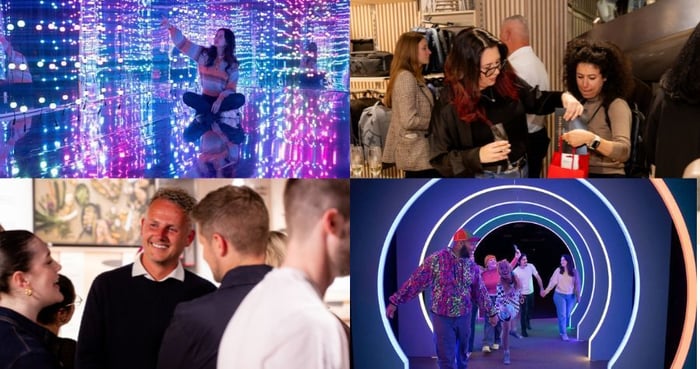
5. Authenticity wins, always
In a digital world over-saturated with AI content, and the real-world full of curated professionalism, authentic human insights are becoming a USP.
Got a founder’s story that sets you apart? Share it. Found a solution to a problem you think would benefit others? Spill the tea. Got a comedy genius working in IT? Make them your behind-the-scenes social icon.
Overly polished content creates extra, unnecessary barriers between your brand and your audience - something you don’t want to do when retention (and capturing attention) is harder than ever.
What the experts say
“Say goodbye to generalised insights and listicals - now, it’s all about those personal stories with real-life impacts that make your experiences unique, and therefore, memorable.”
Natasha Ithildin, Content Strategist
For merch, this means…
…choosing products that feel considered and human - locally made, responsibly sourced, and designed with intention. It’s less about logo volume and more about sharing who you are and what you value through merch.
Read more: How to tell your authentic brand story with merch
Audience Fatigue FAQs
1. What is audience fatigue in marketing?
Audience fatigue is when consumers become overwhelmed by constant ads, emails and content, causing them to disengage from brands.
2. Why are audiences becoming harder to engage
People see thousands of marketing messages daily, making attention harder to capture and keep.
3. How can brands reduce audience fatigue?
Brands can reduce fatigue through personalised messaging, authentic storytelling and meaningful experiences.
4. What marketing trends are shaping 2026?
Key trends include exclusive communities, real-world experiences, personalised marketing and emotion-led content.
5. Why is emotional connection important in marketing
Emotional connections help brands build trust, loyalty and long-term customer relationships.
6. What is ROE in marketing?
ROE stands for Return on Emotion - measuring the emotional impact a brand creates, not just clicks or conversions.
7. Are traditional marketing methods making a comeback?
Yes, brands are increasingly using events, PR, direct mail and experiential campaigns to stand out.
8. Why is authenticity important for brands?
Audiences are drawn to brands that feel human, relatable and genuine, especially in an AI-heavy digital world.
Read more: 4 design trends you'll want to know about in 2026
Make real, lasting connections
What’s connecting all these trend insights is clear: audiences are craving depth in response to digital fatigue.
From deep dives and emotional narratives, your audience wants to feel something when they see your content or read your emails - and we call this ROE.
ROE, or Return on Emotion, is all about turning every activation into an unforgettable, brand-defining moment fueled by emotional connections and reactions.
Because, did you know, 64% of consumers are more likely to remain loyal to a brand with which they feel an emotional connection? And with 95% of purchase decisions driven by emotion, brands are harnessing these insights to build meaningful connections that inspire loyalty and engagement through emotional bonds.
Whether that’s through thoughtful merch, curated communities, smarter communication or immersive real-world campaigns, marketing is shifting towards experiences that feel intentional, that build emotional connections, rather than chasing five seconds of social clout.
In a crowded digital landscape, emotions are becoming the ultimate competitive advantage.
Want more content like this? Sign up for our newsletter, and you’ll receive all the latest trends and insights about marketing, merch and more straight to your inbox. It’s marketing inspiration as you’ve never seen it before.
.png)