What happens when you've got a very average product but want to convince customers that it belongs in a more premium category?
You don’t always need to make a product more expensive to make it feel more valuable.
In a crowded market, perception matters. The way a product is branded, packaged, photographed and described can have a surprisingly big impact on how customers judge its quality – and how much they’re willing to pay for it.
The good news? Creating a premium look doesn’t necessarily require a premium budget. From adding thoughtful finishing touches to tightening up your visual identity, small changes can make a big difference.
Here are five simple tactics to help your products look more expensive, without breaking the bank.
Want more content like this?
Sign up for our newsletter, and you’ll receive all the latest trends and insights about marketing, merch and more straight to your inbox. It’s marketing inspiration as you’ve never seen it before.
In Short...
- Invest in your branding – A polished, consistent identity can make your products feel more established and premium.
- Make packaging part of the experience – Quality materials, considered colours and thoughtful details can influence perceived value.
- Choose your words carefully – Premium products need language that communicates their quality, story and benefits.
- Use high-quality photography – Professional product imagery can instantly make an offering look more desirable.
- Simplify your product range – A carefully curated selection can make it easier for customers to understand and value your premium options.
1. Logo & Branding
Logo design not only conveys your brand's message; it also signals to customers how much you have invested in it. If you settle for a design that is rushed, cheap and not particularly impressive or interesting, that's exactly what you're saying about the company and products it represents.
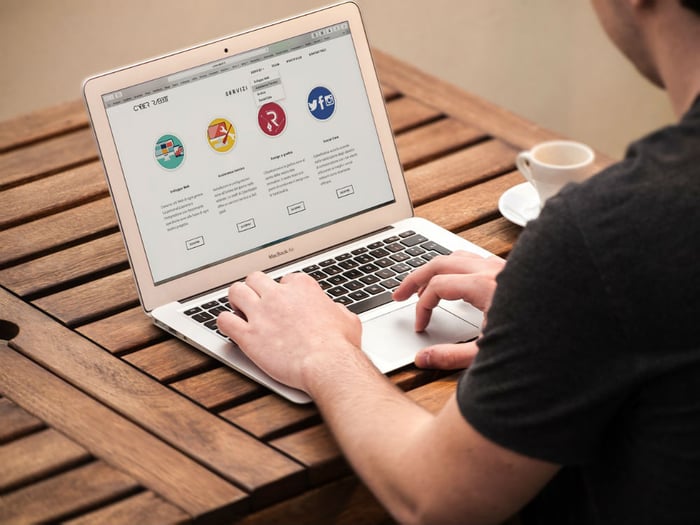
Image Source: Pixabay
This is one area where it really is worth working with a professional designer to create the right messages about your brand – logo included. Thoughtful design that works well in physical spaces (like packaging, marketing materials, and the side of a van) and in the digital world of websites and social media will show customers you're a serious, motivated company worth investing in.
Read more: What format do I need to provide my artwork in when ordering merchandise?
2. Packaging Design
The subliminal cues used in packaging design usually tell customers everything they need to know about the quality of your product before they've even opened it. Luxury goods usually opt for pared-back packaging design, using sharp colours that are frequently linked to extravagance like black, white, gold and silver. Even when choosing a proprietary colour for your brand (think "Tiffany Blue"), do your research to understand the basics of colour theory before settling on a hue.
Image Source: Unsplash
The materials you use will also send a certain message. Compare a box made of wood against ones made from cardboard and plastic. Each material suggests something about the cost and longevity of the product inside (possibly with environmental connotations, too). This applies right down to the labelling of your product; a bespoke metal badge looks more hardwearing, expensive and luxurious than a thin paper label that peels away at the first sign of moisture.
Read more: 4 design trends you'll want to know about in 2026 
3. Language
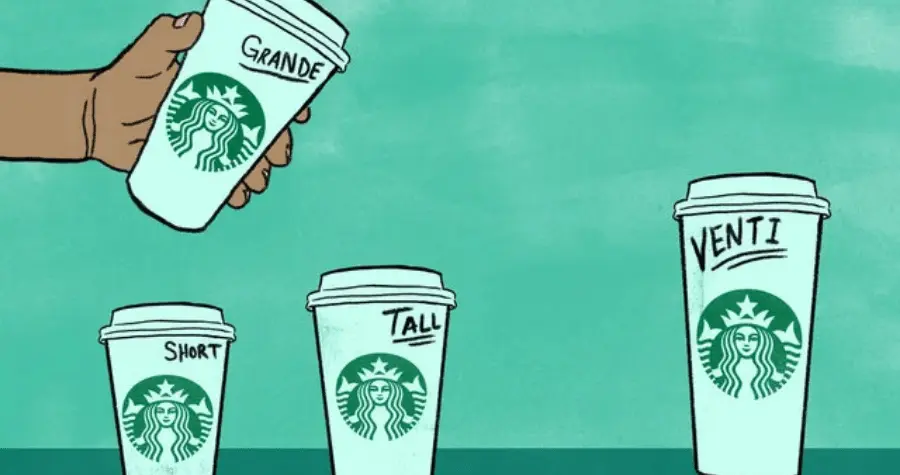
Language has a strong influence on how customers think about your product. Take Starbucks coffee - rather than "small", "medium" and "large", beverages come in "tall", "grande" and "venti". These words were specifically chosen to evoke the romance of Italian coffee bars, transporting customers away from a generic American experience and into a luxurious house of coffee connoisseurs.
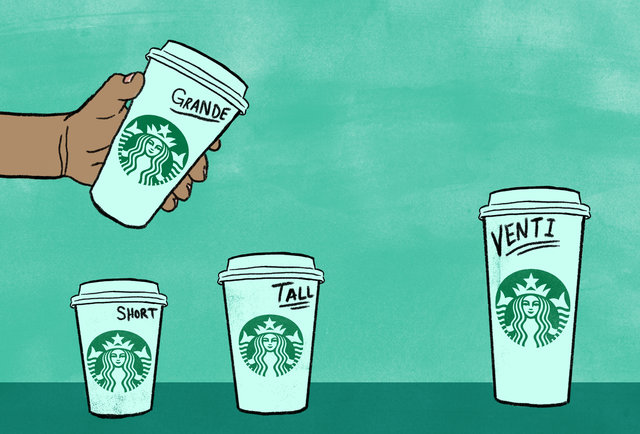
Image Source: Thrillist
Whatever you're selling, look at its features and how it relates to the premium buzzwords of your industry. The current generation of consumer is highly focused on social and environmental factors, so highlight if your goods are sustainable, organic or handcrafted – tell their story wherever possible.
Read more: How brands survive audience exhaustion, according to our experts 
4. Photography
The quality of your product visuals tells your customer all they need to know about the quality of your product. Once you've created a positive first impression with a good photo, most buyers can forgive much of the environment in which they eventually experience whatever it is you're trying to sell. For example, the majority of premium alcoholic spirits are seen in local pubs and supermarket aisles that are nowhere near as trendy or sexy as the bar they're advertised in. Despite that, consumers still link aspirational prestige to their Sipsmith gin and Fever-Tree tonic, over whatever the house standard might be.
Image Source: Unsplash
Amateur shots of luxury goods will fail to secure the appropriate status, while professional pictures of a mediocre offering will make it look high-quality and appealing. Restaurants are a great example of this, where perfectly good food is made to look unappetising in shiny, poorly lit, and badly adjusted menu pictures. Conversely, fast-food giants pay thousands to food stylists and expert food photographers to make even the cheapest, greasiest meals look delicious.
Read more: Planning your next event? Here’s what’s trending, according to our experts
5. Pricing & Choice
When you're trying to occupy a premium space with your product, the secret is to limit the number of options available to your customers. By only offering one high-end option, you eliminate the confusion over which item in your range is the "best" and will make every customer feel satisfied with their selection.
A great example of this concept is the iPhone. There are only ever one or two models available (albeit in a range of shades), so consumers are prepared to shell out a higher cost – they know they're getting the best available product. On the other hand, the Apple Watch was released in a whole range of models, varying from $400 to $17,000. Every customer paid a significant sum of money, but those paying the lower price lost the feeling of buying something premium, while those at the top end of the scale were left questioning what exactly made their watch $16,600 better.
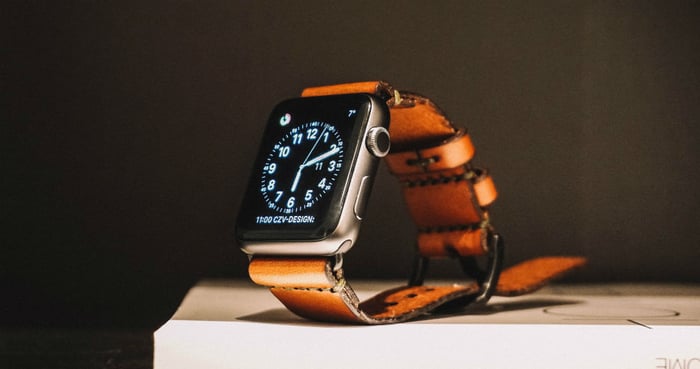
Image Source: Unsplash
When it comes to pricing, the contrast effect is a great way of getting customers to pay exactly what you want. Position your product as the "Goldilocks" option between a budget version and an overpriced model, and the majority of customers will find it the most appealing. Restaurants use this all the time – you're not expected to fork out top dollar for lobster (although they're quids in if you do), but they also know customers don't want to look cheap. By pure psychology, their expensive pasta dishes look "mid-range" in comparison and are ordered at every table.
Read more: Why small merchandise gifts can have a big impact on employee engagement
FAQs
1. How can I make my products look more expensive?
Focus on the details customers see first, including your branding, packaging, photography, product descriptions and pricing structure.
2. Does packaging affect perceived product value?
Yes. Materials, colours, finishes and design can all influence how customers perceive a product's quality and value.
3. Can photography make a product look more premium?
Absolutely. High-quality, well-lit product photography can create a stronger first impression and make products appear more polished and desirable.
4. What language makes a product sound more premium?
Use specific, descriptive language that highlights quality, craftsmanship, materials, benefits and the story behind your product. Avoid generic claims that could apply to anything.
5. Should premium brands offer fewer products?
A more focused range can make the buying decision simpler and help customers understand which products are positioned as premium.
Conclusion
Making a product look more expensive isn’t about adding unnecessary bells and whistles. It’s about creating a polished, consistent experience that makes customers feel they’re getting something worth paying for.
From your branding and packaging to your product photography, language and pricing, every detail can influence perceived value. Get those details working together and even a simple product can feel considered, desirable and premium.
So, before you increase your prices or redesign your entire range, take a closer look at the details your customers see first. Sometimes, a few thoughtful changes can make all the difference.
Want more content like this?
Sign up for our newsletter, and you’ll receive all the latest trends and insights about marketing, merch and more straight to your inbox. It’s marketing inspiration as you’ve never seen it before.